The Transformative Power of Artificial Intelligence: Shaping the Future In the realm of technological advancements, few innovations have captured the world's imagination as much as Artificial Intelligence (AI). From science fiction to reality, AI has become a powerful force driving transformative changes across various industries and sectors. Its significance cannot be overstated, as it has the potential to reshape the way we live, work, and interact with our surroundings. In this blog, we delve into the importance of AI and explore the profound impact it has on our society. 1. Enhancing Efficiency and Productivity: One of the most apparent benefits of AI is its ability to boost efficiency and productivity across industries. By automating repetitive tasks, AI liberates human resources to focus on more complex and creative endeavors. Businesses can streamline processes, optimize resource allocation, and make data-driven decisions faster, resulting in cost savings and increased com...
Revolutionary electric vehicle debuts MBUX Hyperscreen, powered by NVIDIA.
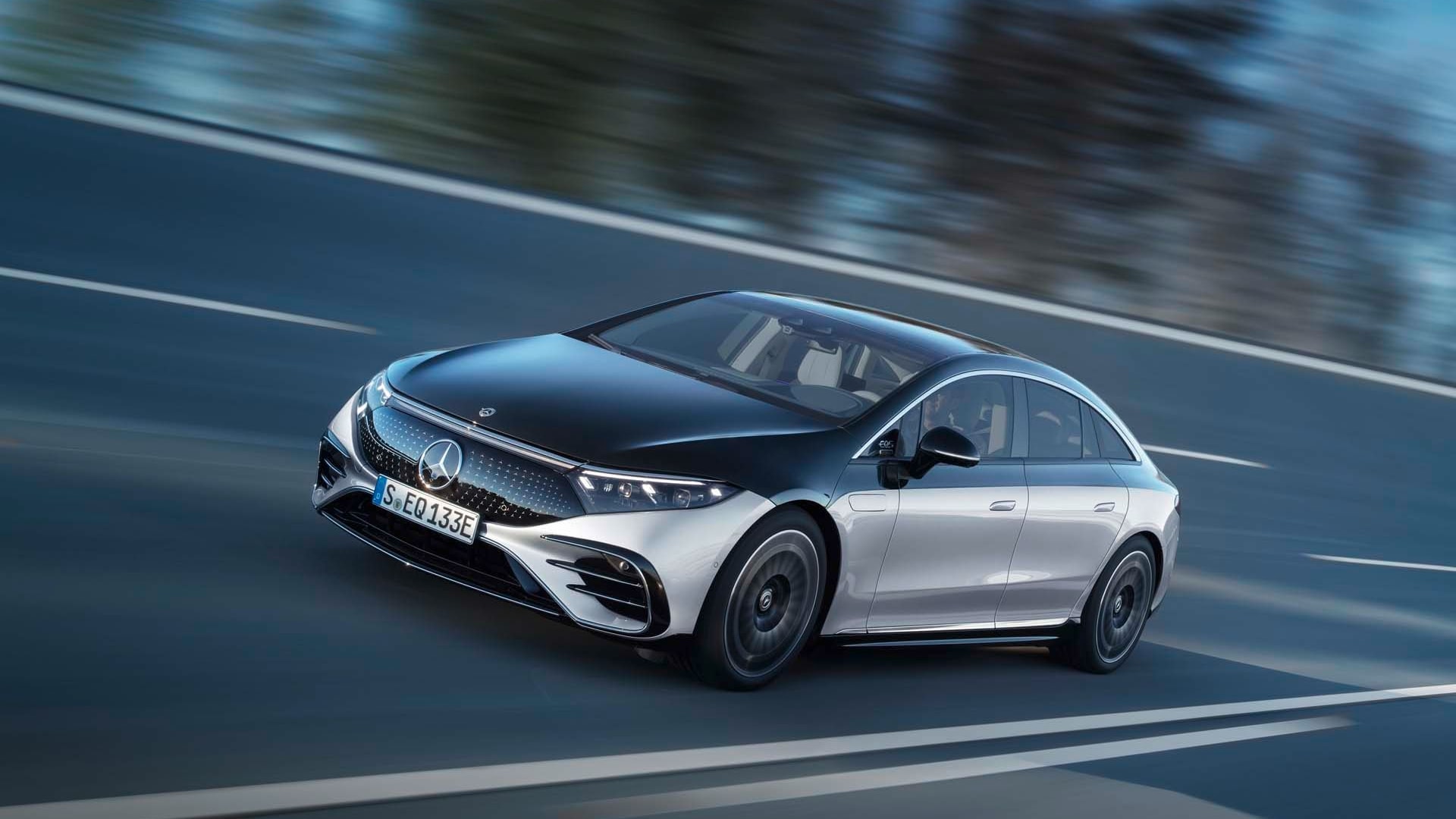
Mercedes-Benz is calling on its long heritage of luxury to accelerate electric vehicle technology with the new EQS sedan.
The premium automaker lifted the wraps off the long-awaited flagship EV during a digital event today. The focal point of the revolutionary vehicle is the MBUX Hyperscreen, a truly intuitive and personalized AI cockpit, powered by NVIDIA.
The EQS is the first Mercedes-Benz to feature the “one bow” design, resembling a high-speed bullet train to increase efficiency as well as provide a quiet, comfortable interior experience.
The cabin is further transformed by the MBUX Hyperscreen — a single, 55-inch surface extending from the cockpit to the passenger seat. It delivers both safety and convenience by displaying all necessary functions at once.
Like the MBUX system recently unveiled with the new Mercedes-Benz S-Class, this extended-screen system runs on the high-performance, energy-efficient NVIDIA DRIVE platform for instantaneous AI processing and sharp graphics.
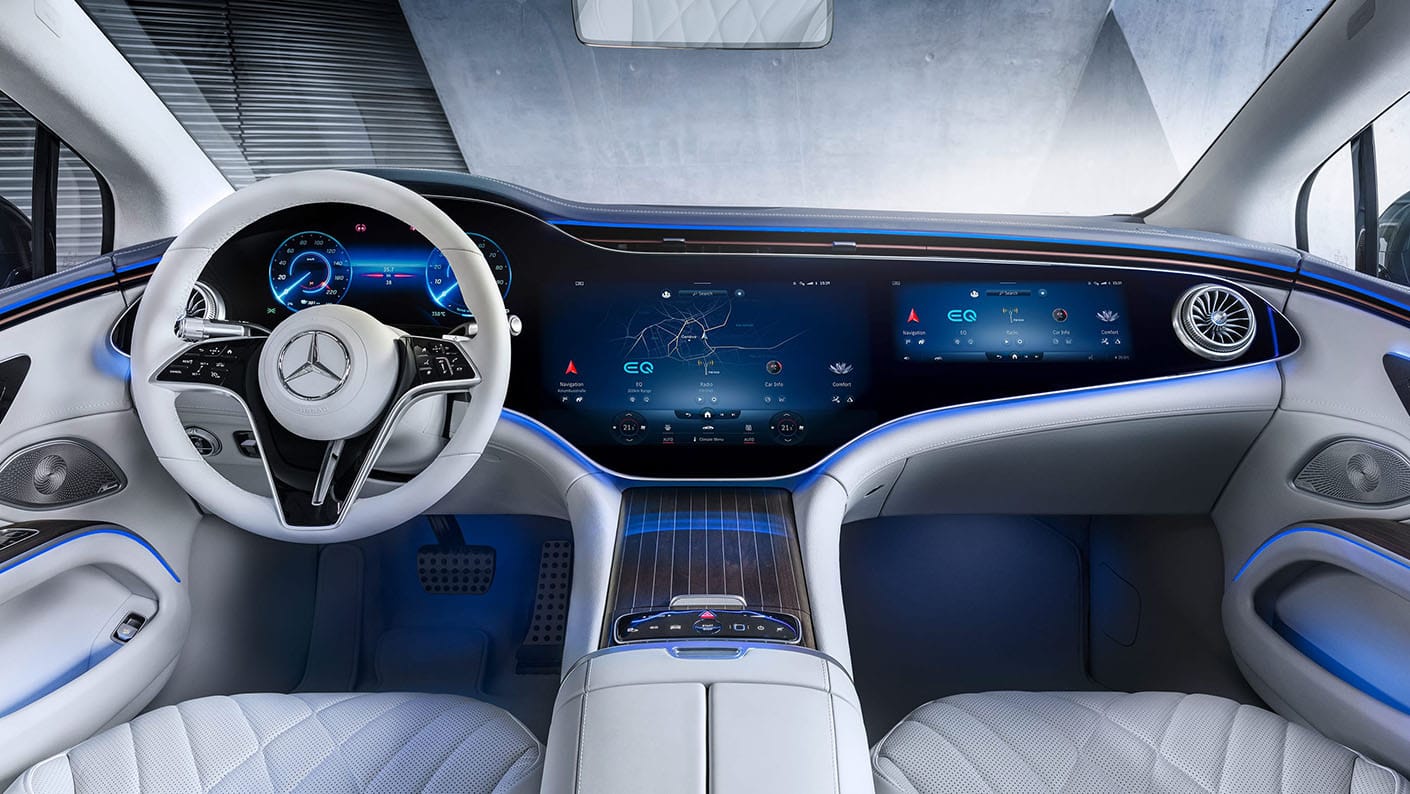
“The EQS is high tech in a true luxury shell,” said Ola Källenius, chairman of the Mercedes-Benz Board of Management.
With NVIDIA’s high-performance, energy-efficient compute, Mercedes-Benz was able to consolidate the varied and distributed cockpit components into one AI platform — with three separate screens under one glass surface — to simplify the architecture while creating more space to add new features.
Intelligence in Many Flavors
The MBUX Hyperscreen makes it easy to focus on the road ahead, yet delivers beautiful graphics for when attention to driving isn’t necessary.
Leveraging a “zero layer” design concept, the display features 90 percent of functions drivers and passengers need right on the surface, reducing the driver’s reliance on buttons or voice commands. An augmented reality heads-up display provides clear, 3D, turn-by-turn navigation, keeping drivers focused.
The deep neural networks powering the system process datasets such as vehicle position, cabin temperature and time of day to prioritize certain features — like entertainment or points of interest recommendations — while always keeping navigation at the center of the display.
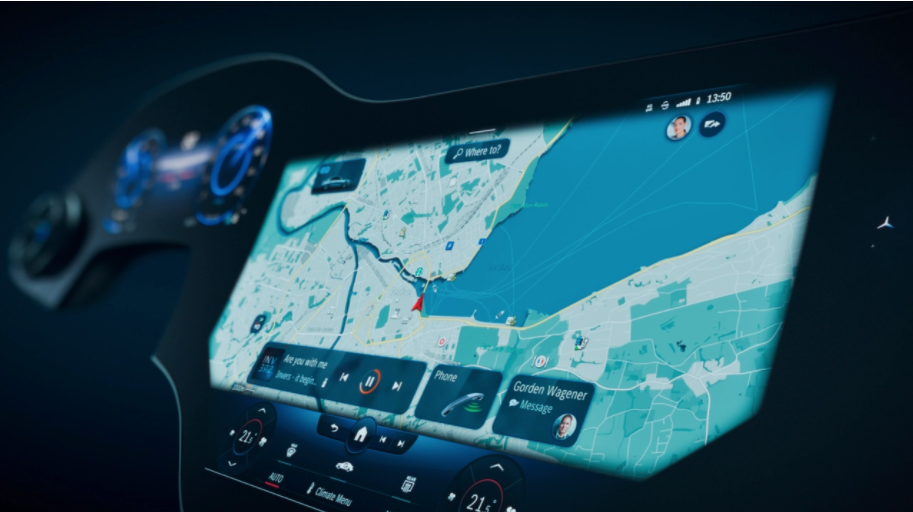
The EQS will be capable of level 3 automated driving with Mercedes-Benz DRIVE PILOT. For times when the driver’s attention doesn’t need to be on the road, the MBUX Hyperscreen provides crystal-clear graphics as well as an intelligent voice assistant for the utmost convenience.
The map feature allows drivers to view their route in 3D, down to the tiniest detail. It can also factor battery capacity, weather conditions and topography into route planning, suggesting charging points along the way if needed. Front-seat passengers also get a dedicated screen for entertainment and ride information that doesn’t interfere with the driver’s display. It also enables the front seat passenger to share content with others in the car.
“The MBUX Hyperscreen surprises with intelligence in many flavors,” said Sajjad Khan, executive vice president at Mercedes-Benz.
And with high-performance NVIDIA compute at MBUX Hyperscreen’s core, users can seamlessly experience these flavors, toggling between features without experiencing any lag or delay.
Ahead of the Curve
Equipped with the most powerful battery in the industry, providing an estimated 478 miles of range and 516 horsepower, the EQS was designed to lead its class in every metric.
The sedan’s sleek design optimizes aerodynamics for lightning-quick acceleration — it can bolt from 0 to 60 mph in 4 seconds — while maintaining battery efficiency and reducing cabin noise.
Taking cues from its internal combustion engine sibling, the Mercedes-Benz S-Class, the EQS boasts the largest interior of any electric sedan on the market. The vehicle can recognize the driver either using facial recognition or fingerprint scanner, and adjust seating and climate settings to personal preferences. It also features customizable ambient lighting for whatever the mood.
The EQS is slated to arrive at U.S. dealerships this summer, ushering in a new generation of intelligent, electric luxury vehicles.
Thanks for your information. very good article.
ReplyDeleteAWS Course
AWS Online Training Hyderabad